
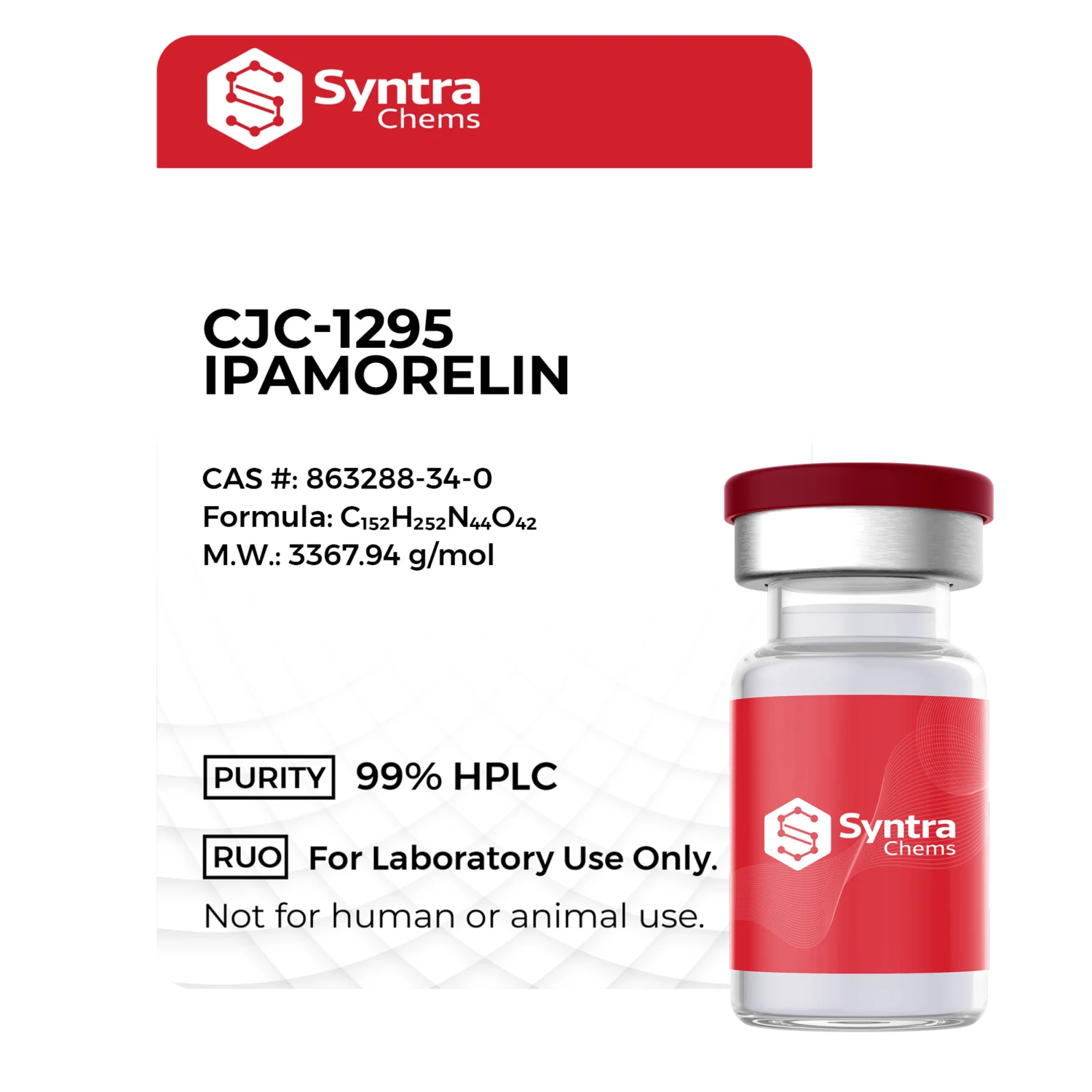



Description
CJC-1295 + Ipamorelin Overview
The CJC-1295 + Ipamorelin blend brings together two peptides commonly studied for their role in growth hormone signaling. CJC-1295, a synthetic analog of growth hormone–releasing hormone (GHRH), is investigated for its potential to promote sustained growth hormone and IGF-1 activity in research models. Ipamorelin, a selective ghrelin receptor agonist, is examined for its ability to stimulate growth hormone release with minimal interaction with other hormonal pathways. Together, these peptides are often explored in laboratory studies focused on metabolic activity, recovery processes, and body composition models.
History
The development of the CJC-1295 + Ipamorelin blend originates from separate advances in peptide science aimed at understanding growth hormone regulation. CJC-1295, a modified analog of growth hormone–releasing hormone, was introduced in the early 2000s to extend the stability and activity of natural GHRH fragments in research examining growth hormone and IGF-1 signaling pathways. At the same time, Ipamorelin emerged from peptide studies in the 1990s focused on ghrelin receptor agonists capable of stimulating growth hormone release while maintaining selective receptor activity. Together, these peptides became a focus of laboratory investigation into hormone signaling, metabolic pathways, and recovery mechanisms in controlled research environments.
CJC-1295 Structure
CAS #: 446036-97-1
Molecular Formula: C₁₅₂H₂₅₂N₄₄O₄₂
Molecular Weight: 3367.9 g/mol
PubChem ID: 91976842
Ipamorelin Structure
CAS #: 170851-70-4
Molecular Formula: C₁₅₂H₂₅₂N₄₄O₄₂
Molecular Weight: 3367.9 g/mol
PubChem ID: 91976842
Research Findings
CJC-1295 and Ipamorelin have been examined in endocrine, metabolic, regenerative, and systemic research models, with studies exploring their interaction with growth hormone pathways, metabolic regulation, tissue recovery processes, and cellular viability. Research also notes their involvement in IGF-1 signaling, repair mechanisms, and broader biological stability in preclinical experimental settings.
Key Areas of Research:
- Endocrine: Growth hormone signaling, IGF-1 activity, hormonal pathways
- Metabolic: Lipid metabolism, lean tissue dynamics, glucose regulation
- Cellular: Cell proliferation, repair responses, recovery processes
- Systemic: Cardiovascular function, biological viability, healing mechanisms
Together, these observations indicate potential experimental relevance for CJC-1295 and Ipamorelin across several biological systems. Through their interaction with growth hormone signaling, metabolic pathways, and cellular recovery processes, this peptide combination provides a useful framework for laboratory research focused on regeneration, biological resilience, and physiological balance in controlled experimental models.

Reviews
There are no reviews yet.