
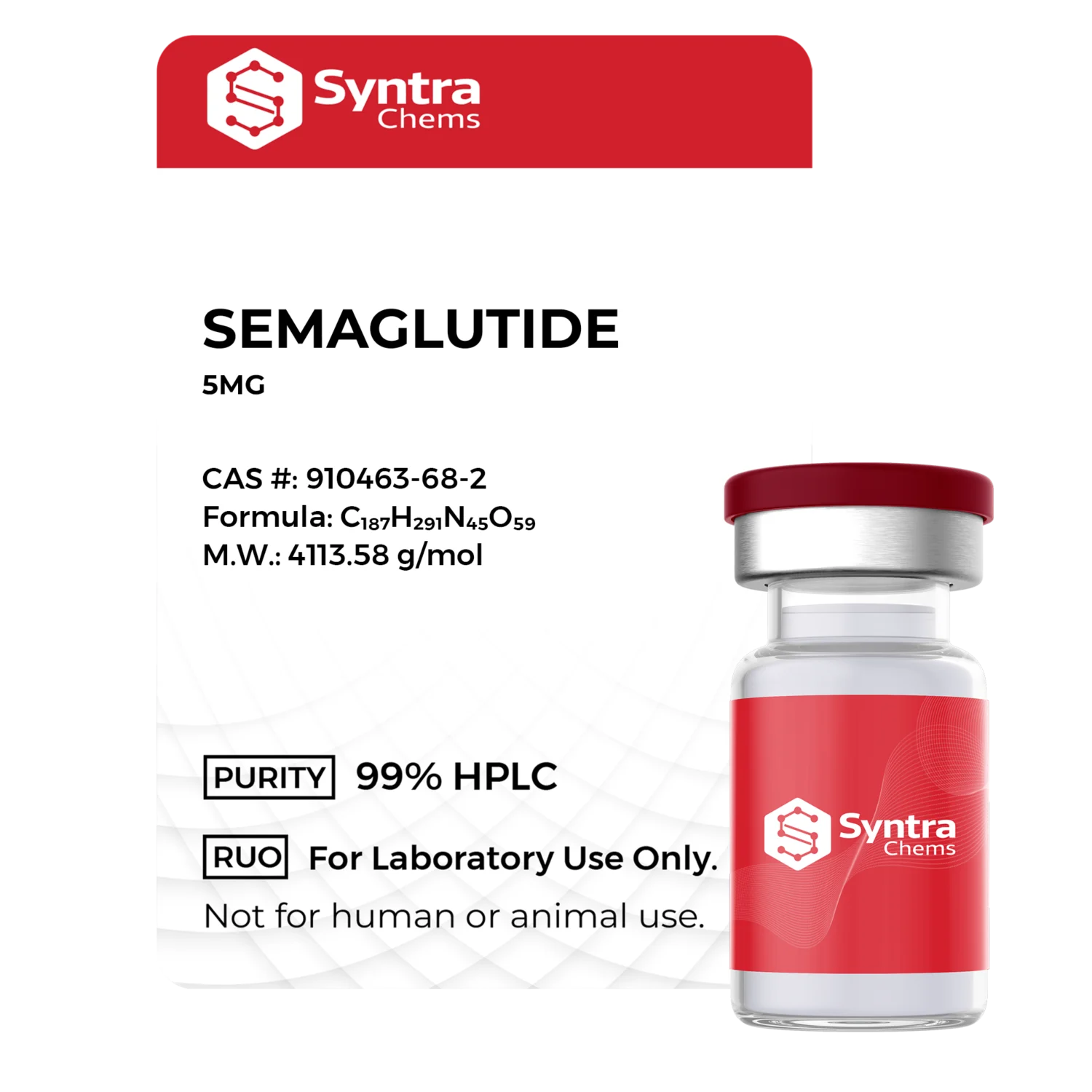



Description
Semaglutide Overview
Semaglutide, commonly known as Semaglutide, is a synthetic peptide analog of glucagon-like peptide-1 (GLP-1) that has been structurally modified to extend its biological activity. In laboratory and preclinical models, it is investigated for its ability to activate GLP-1 receptors, influence insulin signaling, and regulate cellular pathways related to glucose metabolism and endocrine system function.
History
Research into GLP-1 biology began in the 1980s following the discovery of its role in glucose regulation and endocrine signaling processes. Early synthetic GLP-1 receptor agonists demonstrated the potential to prolong receptor activation, though their short half-life limited long-term study. Semaglutide was later developed with targeted structural modifications at specific amino acid positions to improve receptor binding and extend duration of activity, allowing researchers to further explore incretin signaling and metabolic pathways in experimental models.
Semaglutide Structure
CAS #: 910463-68-2
Molecular Formula: C₁₈₇H₂₉₁N₄₅O₅₉
Molecular Weight: 4113.6 g/mol
PubChem ID: 56843331
Research Findings
Sema, also known as Semaglutide, has been investigated in metabolic, endocrine, and cardiovascular research models, with studies examining its role in glucose regulation, insulin signaling, and metabolic pathway activity. Research also explores its involvement in lipid metabolism, appetite signaling, and cardiovascular-related biological processes within preclinical and clinical environments.
Key Areas of Research:
- Metabolic: Glucose metabolism, insulin signaling, energy balance
- Endocrine: GLP-1 receptor pathways, hormone regulation
- Cardiovascular: Lipid metabolism, cholesterol pathways, systemic effects
Together, these observations indicate broad experimental relevance for Semaglutide across metabolic, endocrine, and cardiovascular biological systems. Through its interaction with GLP-1 signaling and its influence on glucose and lipid pathways, Semaglutide provides a useful framework for laboratory research focused on metabolic regulation, cardiovascular biology, and systemic physiological stability.

Reviews
There are no reviews yet.