


Alexander finn Site

Need help? Text us, and a team member will reply in mins +1 123 456 7891

Have questions about bpc-157?
Text us: +1 123456789

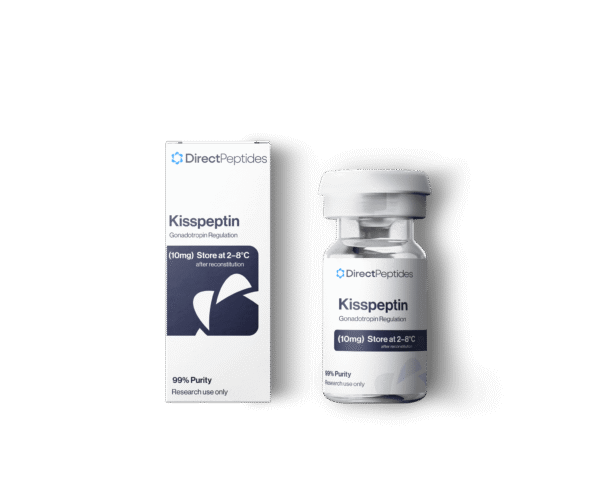
Kisspeptin

Gonadotropin Regulation

Price range: $59.00 through $529.00

Quantity

Research Use Only

These products are for laboratory research only and not intended for medical use. They are not FDA-approved to diagnose, treat, cure, or prevent any disease. By purchasing, you certify they will be used solely for research and not for human or animal consumption.

What is Kisspeptin-10?

Kisspeptin-10 is a synthetic decapeptide sequence representing the biologically active C-terminal fragment of the KISS1 gene product. In research settings, it is investigated for its high-affinity binding to the kisspeptin receptor (KISS1R/GPR54) and its role in activating intracellular signaling cascades, making it a subject of interest in studies on neuroendocrine regulation, receptor pharmacology, and GnRH pathway modulation.

Made in the USA

Quality controlled from start to finish.
No outsourcing.

Need Help?

Send us a message.

Kisspeptin-10 Overview

Kisspeptin represents a central signaling molecule in the hypothalamic-pituitary-gonadal (HPG) axis, acting as a master regulator of reproductive function. As a family of peptides ranging from kisspeptin-10 to kisspeptin-54, these molecules bind to the kisspeptin receptor (KISS1R, formerly GPR54) and play essential roles in reproductive neuroendocrinology. Through KISS1R activation on GnRH neurons, kisspeptin influences pulsatile GnRH release, puberty initiation, and fertility regulation. Research models examine its role in reproductive hormone secretion, neuroendocrine feedback loops, and developmental reproductive biology.

Jayasena et al. (2014). Trevisan et al. (2018).

History

Kisspeptin was initially identified in 1996 as a metastasis suppressor gene product in melanoma research, leading to its original name ‘metastin.’ The critical reproductive role was discovered in 2003 when loss-of-function mutations in KISS1 and KISS1R were found to cause hypogonadotropic hypogonadism in humans. This breakthrough established kisspeptin as a key regulator of mammalian reproduction and sparked extensive neuroendocrine research.

Mills & Dhillo (2022).

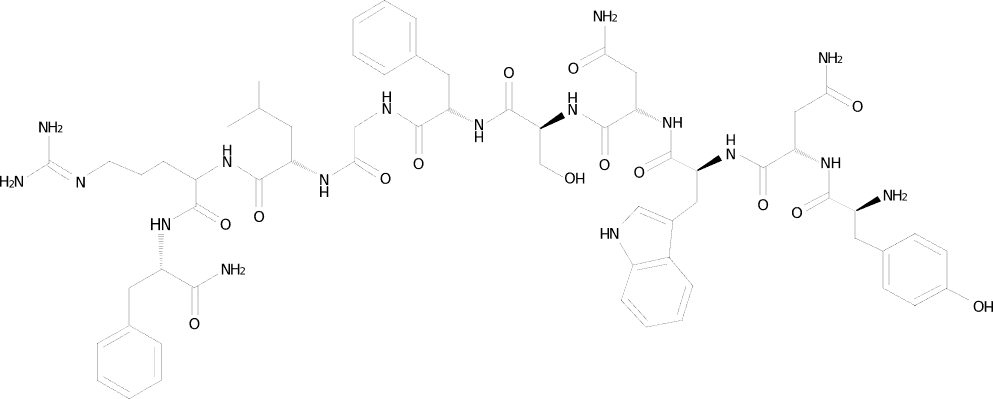
Kisspeptin-10 Structure

CAS#: 374675-21-5

Molecular Formula: C₆₃H₈₃N₁₇O₁₄

Molecular Weight: 1302.45 g/mol

PubChem ID: 25240297

Research Findings

Kisspeptin has been extensively studied in reproductive neuroendocrinology research, with investigations focusing on GnRH neuron regulation, puberty mechanisms, fertility control, and HPG axis dynamics in various experimental models. Studies examine kisspeptin’s interactions with neurokinin B and dynorphin in the hypothalamic KNDy neuron system.

Key Areas of Research:

• Reproductive neuroendocrinology: GnRH secretion, LH/FSH pulsatility, puberty initiation

• Hypothalamic signaling: KNDy neurons, arcuate nucleus activity, median eminence release

• Receptor pharmacology: KISS1R activation, signaling pathways, receptor distribution

• Developmental biology: Pubertal maturation, reproductive axis establishment, gonadal function

These findings demonstrate kisspeptin’s fundamental role in mammalian reproductive biology. Through its upstream regulation of GnRH neurons, kisspeptin provides a research framework for understanding reproductive hormone control, fertility mechanisms, and neuroendocrine integration across developmental stages and physiological states.

Trevisan et al., Frontiers in Endocrinology, 2018

Description

Kisspeptin-10 Overview

Kisspeptin represents a central signaling molecule in the hypothalamic-pituitary-gonadal (HPG) axis, acting as a master regulator of reproductive function. As a family of peptides ranging from kisspeptin-10 to kisspeptin-54, these molecules bind to the kisspeptin receptor (KISS1R, formerly GPR54) and play essential roles in reproductive neuroendocrinology. Through KISS1R activation on GnRH neurons, kisspeptin influences pulsatile GnRH release, puberty initiation, and fertility regulation. Research models examine its role in reproductive hormone secretion, neuroendocrine feedback loops, and developmental reproductive biology.

Jayasena et al. (2014). Trevisan et al. (2018).

History

Kisspeptin was initially identified in 1996 as a metastasis suppressor gene product in melanoma research, leading to its original name ‘metastin.’ The critical reproductive role was discovered in 2003 when loss-of-function mutations in KISS1 and KISS1R were found to cause hypogonadotropic hypogonadism in humans. This breakthrough established kisspeptin as a key regulator of mammalian reproduction and sparked extensive neuroendocrine research.

Mills & Dhillo (2022).

Kisspeptin-10 Structure

CAS#: 374675-21-5

Molecular Formula: C₆₃H₈₃N₁₇O₁₄

Molecular Weight: 1302.45 g/mol

PubChem ID: 25240297

Research Findings

Kisspeptin has been extensively studied in reproductive neuroendocrinology research, with investigations focusing on GnRH neuron regulation, puberty mechanisms, fertility control, and HPG axis dynamics in various experimental models. Studies examine kisspeptin’s interactions with neurokinin B and dynorphin in the hypothalamic KNDy neuron system.

Key Areas of Research:

• Reproductive neuroendocrinology: GnRH secretion, LH/FSH pulsatility, puberty initiation

• Hypothalamic signaling: KNDy neurons, arcuate nucleus activity, median eminence release

• Receptor pharmacology: KISS1R activation, signaling pathways, receptor distribution

• Developmental biology: Pubertal maturation, reproductive axis establishment, gonadal function

These findings demonstrate kisspeptin’s fundamental role in mammalian reproductive biology. Through its upstream regulation of GnRH neurons, kisspeptin provides a research framework for understanding reproductive hormone control, fertility mechanisms, and neuroendocrine integration across developmental stages and physiological states.

Trevisan et al., Frontiers in Endocrinology, 2018

Additional information

Pcs

Pack of 10, Single Vial

Strength

10mg

Reviews

There are no reviews yet.

Be the first to review “Kisspeptin”

Your email address will not be published. Required fields are marked *

Text us, our dedicated team is here to help.

Reach out and get a response within minutes

+1 123456789