
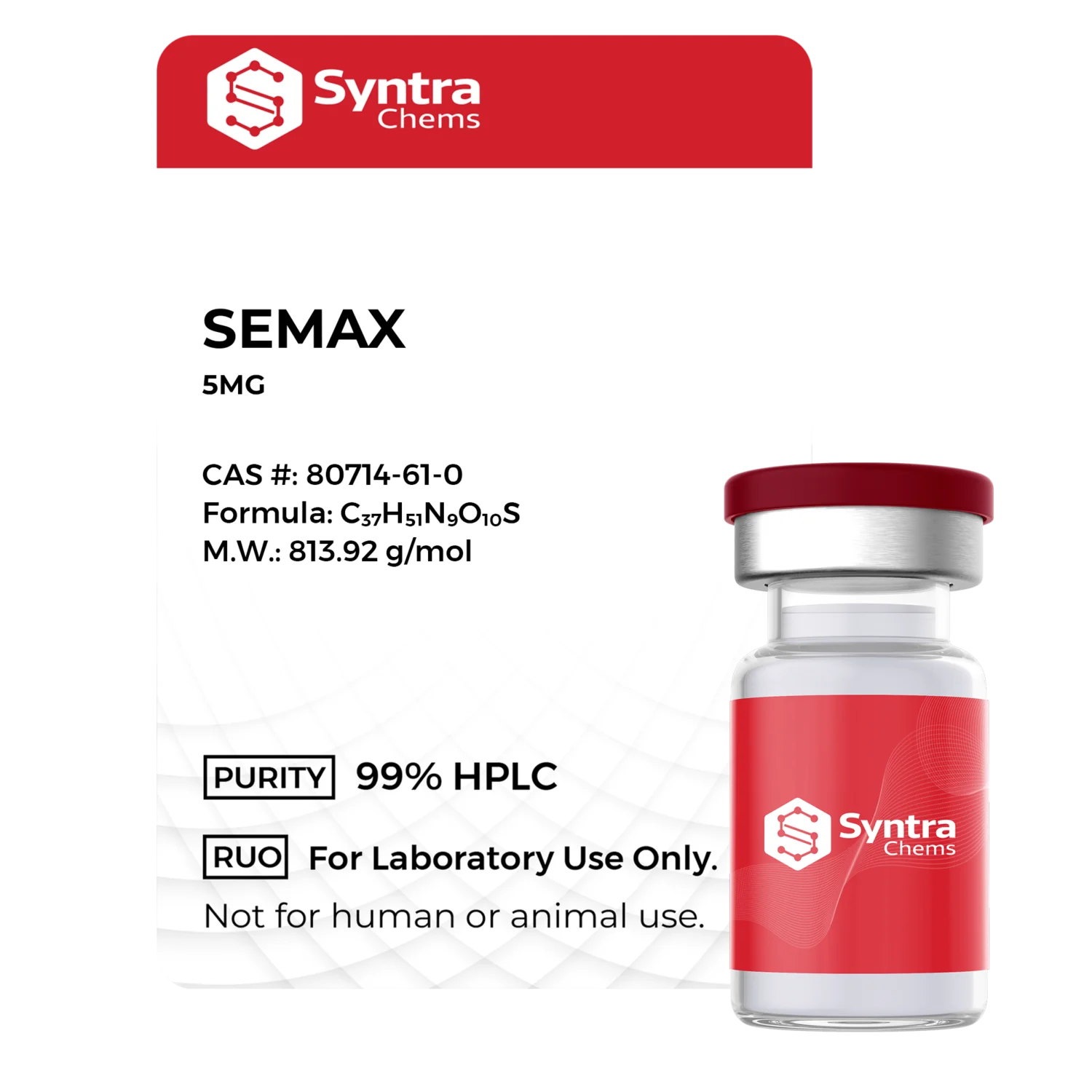



Description
Made in the USA
Manufactured in the United States with strict quality control throughout the entire production process.
No outsourcing.
Semax Overview
Semax is a synthetic heptapeptide derived from the ACTH (4–10) fragment with an added C-terminal Pro-Gly-Pro sequence to enhance stability. In laboratory and preclinical research models, it is investigated for its potential influence on neuroprotection, cognitive signaling processes, and cellular stress response pathways. Studies often examine its role in regulating neurotrophic factor expression, neurotransmitter systems, and oxidative stress responses.
History
Semax was developed in Russia during the 1980s and 1990s as part of research focused on synthetic peptides with neuromodulatory potential. Scientists designed it to retain the neuroactive segment of ACTH while eliminating its hormonal activity, creating a stable peptide for central nervous system research. Over time, scientific interest expanded to include studies of neuroprotection, synaptic plasticity, and gene expression regulation in neural research models.
Research Findings
Semax has been examined in neurological, cognitive, and systemic research models, with studies exploring its role in neuroprotective mechanisms, cognitive function pathways, and stress-related biological responses. Research also investigates its involvement in neurotransmitter signaling, oxidative stress regulation, and cellular recovery processes in preclinical environments.
Key Areas of Research:
- Neurological: Neuroprotection mechanisms, neural signaling pathways
- Cognitive: Memory processes, learning mechanisms, cognitive activity
- Systemic: Stress-response pathways, cellular repair, biological resilience
Together, these observations indicate broad experimental relevance for Semax across neurological, cognitive, and systemic biological systems. Through its interaction with neurotransmitter pathways and neurotrophic signaling processes, Semax provides a useful framework for laboratory research investigating cognition, neural stress responses, and systemic biological stability.
Reviews
There are no reviews yet.